

Why Acoustic Testing Matters in Automotive Testing and Development
)
What Has Changed with Modern Vehicles?
Several decades ago, engine noise, exhaust systems, and road noise naturally masked many low-level interior sounds, causing small squeaks and rattles to go largely unnoticed because they blended seamlessly into the overall driving experience.
Today's vehicles present a very different challenge. Improved body structures, better insulation, quieter powertrains, and advances in tire and suspension design have dramatically reduced background noise inside the passenger compartment. Electric vehicles have accelerated this trend even further by eliminating many of the sounds traditionally associated with internal combustion engines.
While these improvements create a quieter and more comfortable cabin, they also expose occupants to noises that would have gone unnoticed before.
We see this in the real-world example of a wiring harness contacting a seat frame. This component may have produced a barely noticeable click in an older vehicle with higher engine noise. However, in modern electric vehicles, that same click can become immediately apparent to the driver because there are fewer competing sounds to mask it. Thus, as the overall noise decreases, the acceptable level of component noise becomes increasingly stringent.
Why Automotive Acoustics Matter to Customers and Manufacturers
Occupants often perceive sound as an indicator of vehicle quality and condition. Even minor noises, such as an instrument panel rattle or an irregular power window motor sound, can lead occupants to believe that a vehicle has a functional issue, even when no actual malfunction exists. Unwanted noises can also create a perception of poor build quality or a less refined vehicle, potentially causing the occupant to view the vehicle as “cheap” or lower quality than it is.
For automotive manufacturers, these perceptions matter. Even when a component functions exactly as designed, unwanted noise can negatively influence:
Beyond the concerns arising from inconsistent sounds, vehicles still need to provide useful feedback to the driver, such as:
Acoustic Engineering Solutions
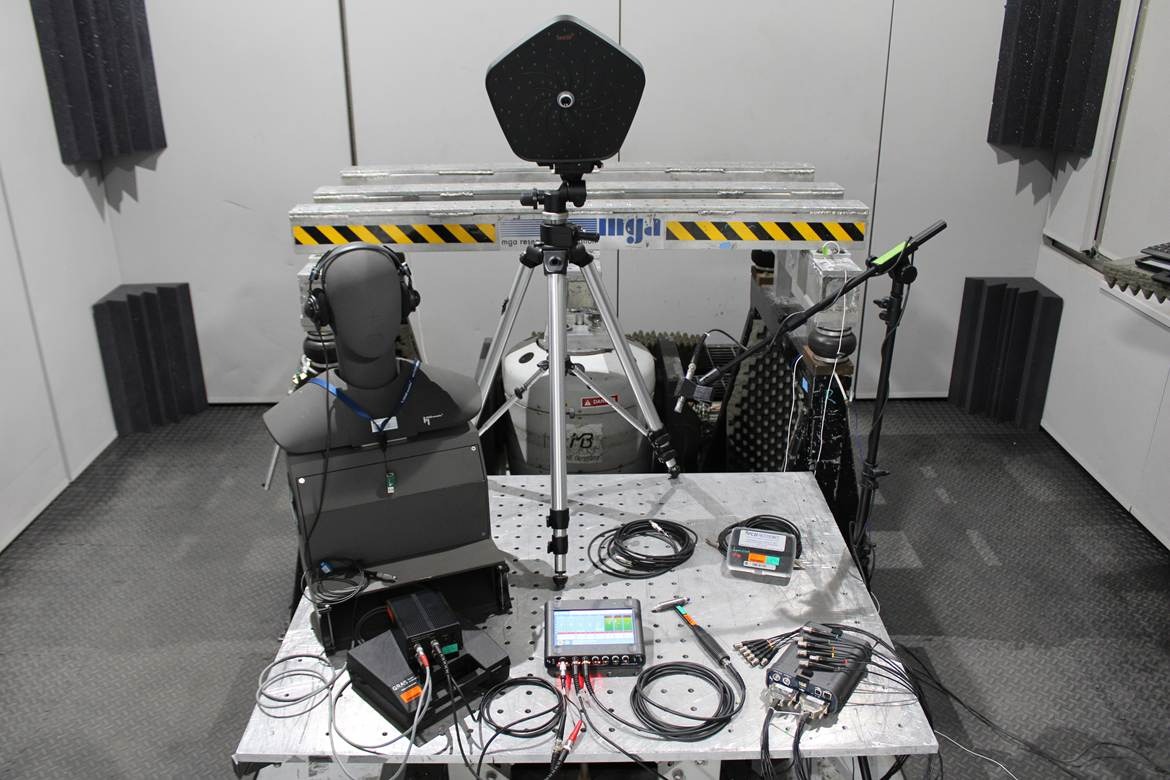
Acoustic testing helps engineers identify and resolve these concerns and objectives before the vehicle reaches production. Engineers use controlled laboratory environments such as semi-anechoic chambers, specialized microphones, accelerometers, vibration shakers, data acquisition systems, and subjective evaluations to isolate, measure, and reproduce unwanted noises. By combining objective measurements with human perception, they can determine the root cause of noise, validate corrective actions, and confirm that design changes improve vehicle sound quality without introducing new issues.
The MGA Advantage: Advanced Facilities and Technology

At MGA, this proactive approach to acoustic testing is supported by specialized facilities and advanced measurement technology. At our dedicated sound laboratory in Troy, Michigan, engineers use equipment, including the HEAD acoustics LabCOMPACT12 Frontend DAQ Unit, to perform comprehensive evaluations of components and vehicle systems. These tools allow for
Acoustic testing is incorporated throughout the development process, enabling engineers to assess potential noise concerns at every stage, from individual components to complete vehicle systems.
Components commonly evaluated include:
By testing these components individually, engineers can identify and address potential noise issues long before they reach the vehicle assembly stage. Early detection allows design modifications to be made when they are faster, more cost-effective, and easier to implement. For example, resolving an intermittent squeak during the prototype phase is far more manageable than making changes after production tooling has been completed. This early validation process helps ensure quieter, higher-quality vehicle interiors while reducing the risk of costly late-stage revisions.
Looking Ahead to the Impact of Acoustic Testing on Modern Vehicles
Understanding why acoustic testing matters is the first step in appreciating how modern vehicles achieve the level of refinement customers expect. Detecting and evaluating unwanted sounds, however, requires more than skilled engineers and sophisticated instrumentation—it requires a carefully controlled environment where external influences are minimized, and low-level noises can be isolated with confidence.
Learn more about how MGA can support your acoustic testing needs: www.mgaresearch.com/contact.
)
)
)
)
)
)
)
)

)
)
)
)
)
)
)
)
)

)
)
)
)
)